Find Your Perfect Ride

 About Us
 Sustainability
 Perth to Bondi
 Reviews
 ACF x Vamos
 Blog


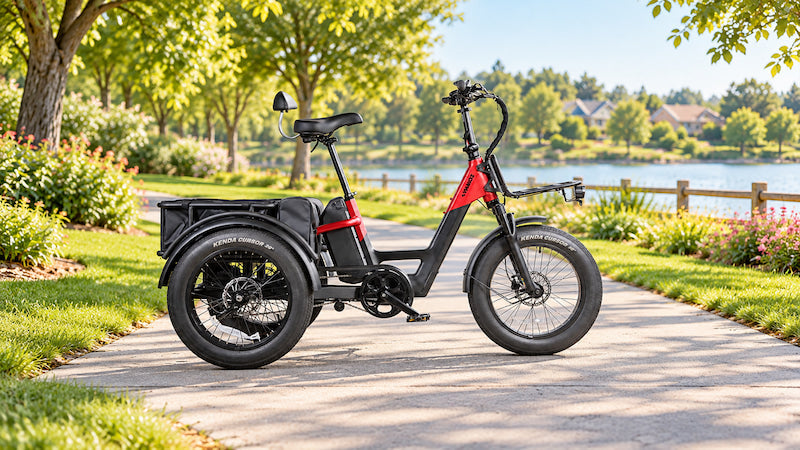
|
Quick Answer: A 3-wheel electric bike is worth it if you want more stability than a regular e-bike can give. An electric trike pairs three wheels with a motor and pedal assist, so it stays upright when stopped, carries more and takes less effort on hills. It suits seniors, riders with balance issues and anyone doing grocery runs. The trade-offs are size, weight and a higher price. |
Electric bikes have gone mainstream in Australia. Bicycle Industries Australia expects 250,000 to 300,000 e-bikes to sell nationally in 2026, up from about 9,000 in 2017 (NRMA). Yet not every rider feels at home on two wheels.
That's where the electric tricycle comes in. An e-trike is a tricycle with an electric motor, a rechargeable battery, and pedal assist; some models also add a throttle. You pedal as you would on a regular bicycle, but the motor provides support, and the third wheel means you never have to balance.
For many riders, that combination opens up a new kind of mobility and freedom. Seniors, people returning to cycling and anyone managing balance issues can run city errands without reaching for the car keys. Below, we break down the pros and cons of a trike, who should buy one, and the Vamos models worth a look.
Key Takeaways
- An electric trike stays stable at low speed, and when stopped, so you never need to balance at lights or in traffic.
- Rear baskets and front racks give e-trikes far more cargo capacity than most e-bike models, making them well-suited to errands and grocery runs.
- The trade-offs are width, weight, storage and slower cornering.
- Trikes suit seniors, riders with balance issues, families cutting back on car trips and anyone who puts comfort ahead of speed.
- Before you buy, compare the motor, battery range, brakes, tyres and seat comfort.
Pros and Cons of a 3-Wheel Electric Bike
An electric trike trades some speed and convenience for stability, comfort and carrying power. Here's how the main advantages and drawbacks compare.
|
Pros |
Cons |
|
Stays stable without balancing |
Wider and harder to store |
|
Easy mounting with a step-through frame |
Heavier than a regular e bike |
|
High cargo capacity |
Can't lean into corners |
|
Upright, comfortable seating |
Higher upfront price |
|
Less effort on hills |
Bulkier to park and lock |
Pros
Better Stability and Balance at Low Speed
Stability is the main reason most people choose a trike. With three wheels on the ground, the bike stays upright on its own when you're stopped at lights, creeping through traffic or setting off on a slope. There's no wobble at low speed and no need to put a foot down.
For riders with balance issues, inner-ear conditions or reduced leg strength, that can be the difference between staying home and riding with confidence. Even confident cyclists notice how stable a trike feels with a heavy load on board.
Easy Mounting and an Upright Riding Position
Most electric trikes use a low step-through frame, so you walk into the bike rather than swing a leg over the saddle. Easy mounting means getting on without straining your hips or knees.
Once you're on, the position is upright, with your body weight spread across a wide seat rather than leaning forward onto your wrists. Many models add a backrest, which takes pressure off the lower back on longer rides.
More Cargo Capacity for Errands and Shopping
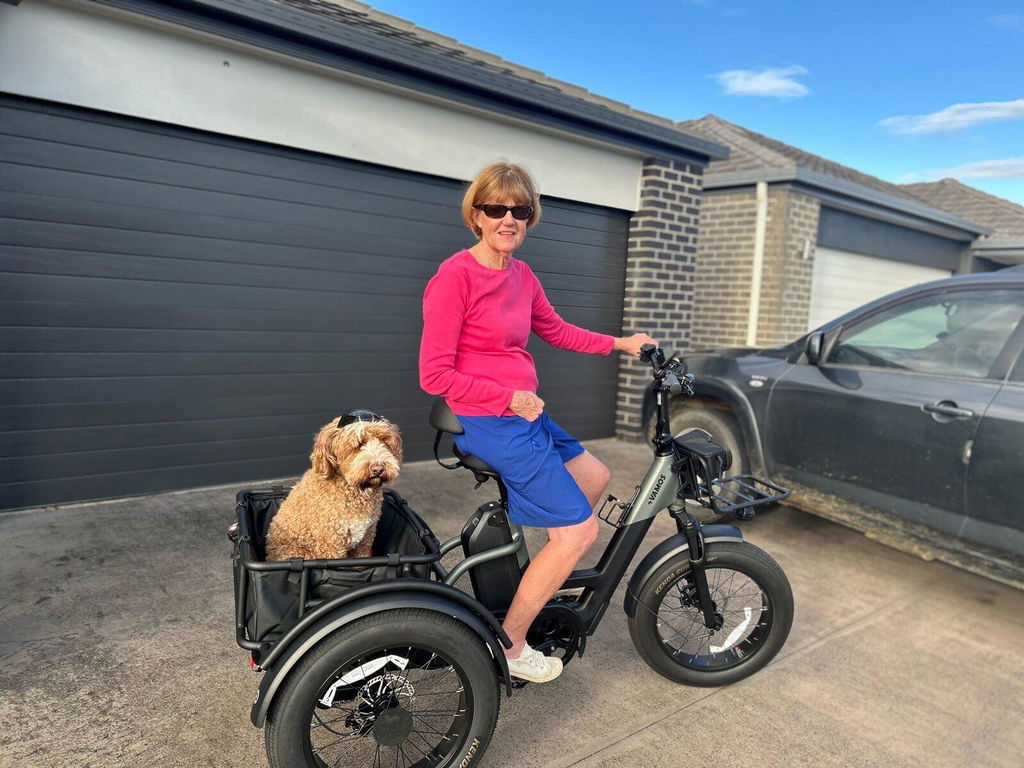
An e-trike is a natural workhorse. The space between the two rear wheels usually holds a large basket or carrier, and many models also add a front rack. That cargo capacity puts trikes in the same league as dedicated cargo bikes.
You can carry a week's shopping, picnic gear for the family or garden supplies without a backpack or a trailer. If grocery runs and errands are your main reason to ride, the ability to carry heavy loads without upsetting the balance is hard to beat.
A Comfortable, Smooth Ride
Comfort features are standard on most electric trikes. A front suspension fork absorbs bumps and potholes, wide tyres add cushioning, and a sprung seat post takes the edge off rough paths.
Pair that with swept-back handlebars and an upright position, and you get a smooth ride that's easier on the joints than a road or mountain bike. Longer outings feel less tiring as a result.
Less Effort on Hills, Still Good Exercise
The motor does much of the heavy lifting. Pedal assist adds power each time you push the pedal, and a torque sensor matches that boost to how hard you pedal, so it feels natural. Strong torque helps on hills, especially with a full basket.
By choosing the assist level, you can reduce support for more exercise or increase it when you're tired. It's low-impact cycling that keeps you moving without leaving you exhausted.
Cons
Wider and Harder to Store
A wide rear axle is great for stability but less handy for storage. Some trikes won't fit through a standard house door or a narrow side gate, and they take up more garage or apartment space.
Unlike a bike with a folding frame, an e-trike can't collapse into a compact shape. Even models with folding handlebars stay bulky, so measure your storage space before you buy.
Heavier Than a Regular E-Bike
Three wheels, a bigger frame and a large battery add weight. Lifting a trike onto a car rack or carrying it up stairs is more than a bit of a challenge. If you need to transport your bike often, check the weight and rack compatibility first, or plan to ride straight from home.
Handles Differently in Corners
On two wheels, riders lean into turns. A trike stays flat, so you slow down and steer through corners instead. Taking a tight bend at speed can lift the inside wheel. Most riders adjust within a few rides, but practise in a quiet street first.
Higher Upfront Price
Electric trikes usually cost more than comparable two-wheel models because they need extra wheels, a wider rear axle and a stronger frame. Weigh the purchase against what it replaces. If a trike takes over short car trips, savings on fuel and parking can make it a good deal over time. Prioritise build quality, battery brand and warranty over the lowest price.
Bulkier to Park and Lock
Most bike racks are built for two wheels, so parking an e-trike in the city takes some planning. You may need to lock it to a pole or post using a chain plus a frame lock. Look for spots where the trike won't block footpaths.
Who Should Buy a 3-Wheel Electric Bike?
A 3-wheel electric bike isn't for everyone, but for some riders it's the best fit on the market. These are the groups that benefit most.
Seniors and Returning Riders
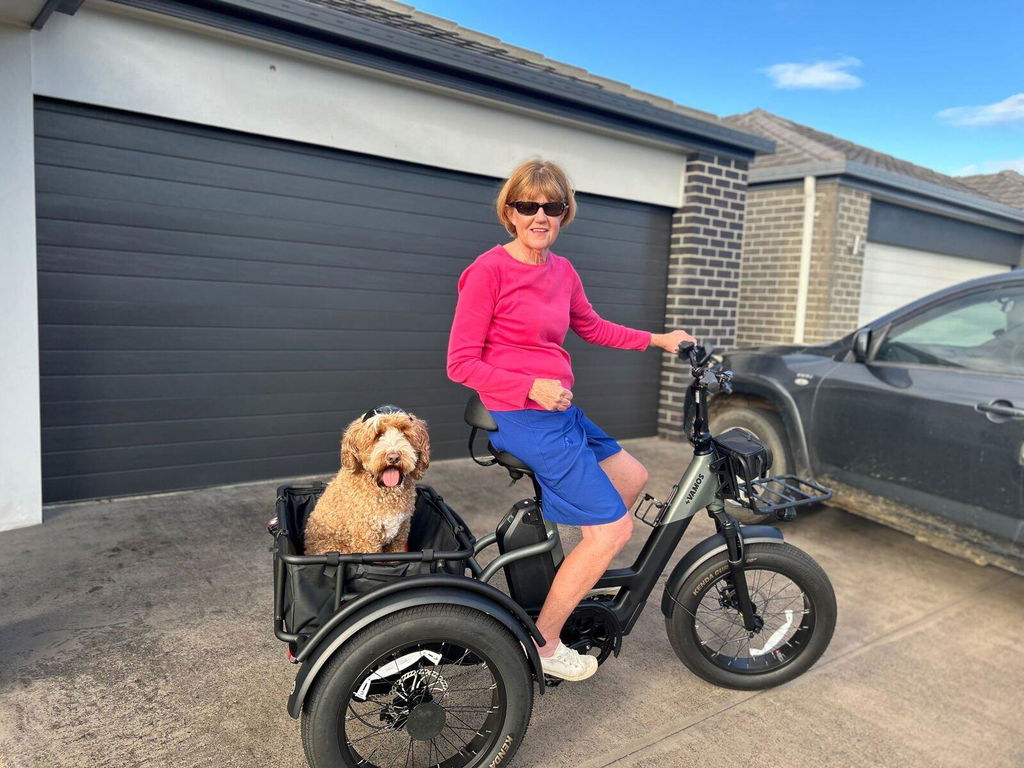
For seniors and anyone returning to cycling after a long break, a trike removes the fear of falling. The low frame, upright position and supportive seat make the first ride feel easy, and pedal assist keeps hills manageable. The Vamos Papa Grande Pro 2026, with its padded seat and backrest, is built with this rider in mind.
Riders With Balance Issues or Limited Mobility
If balance issues have kept you off a regular bike, three wheels can give back independent mobility. You can stop, start and wait at crossings without steadying yourself. Both Vamos trikes offer this stable platform, with hydraulic brakes and a lockable parking brake. Vamos notes that NDIS participants may be eligible for Assistive Technology funding toward the Papa Grande Pro.
Errand Runners and Grocery Shoppers
If most of your trips are to the shops, the pharmacy or the post office, cargo space matters more than speed. The Papa Grande Pro's rear carrier holds up to 50kg, and its front rack takes extra bags. That's enough for a full shopping trip.
Families Cutting Down on Car Trips
Households trying to use the car less can hand local shopping, library visits and weekend outings over to a trike. The Vamos Trio is the lighter, more affordable option at about 30kg, and it still carries up to 50kg in its rear carrier. That frees the car for longer journeys.
Beach and Mixed-Terrain Riders
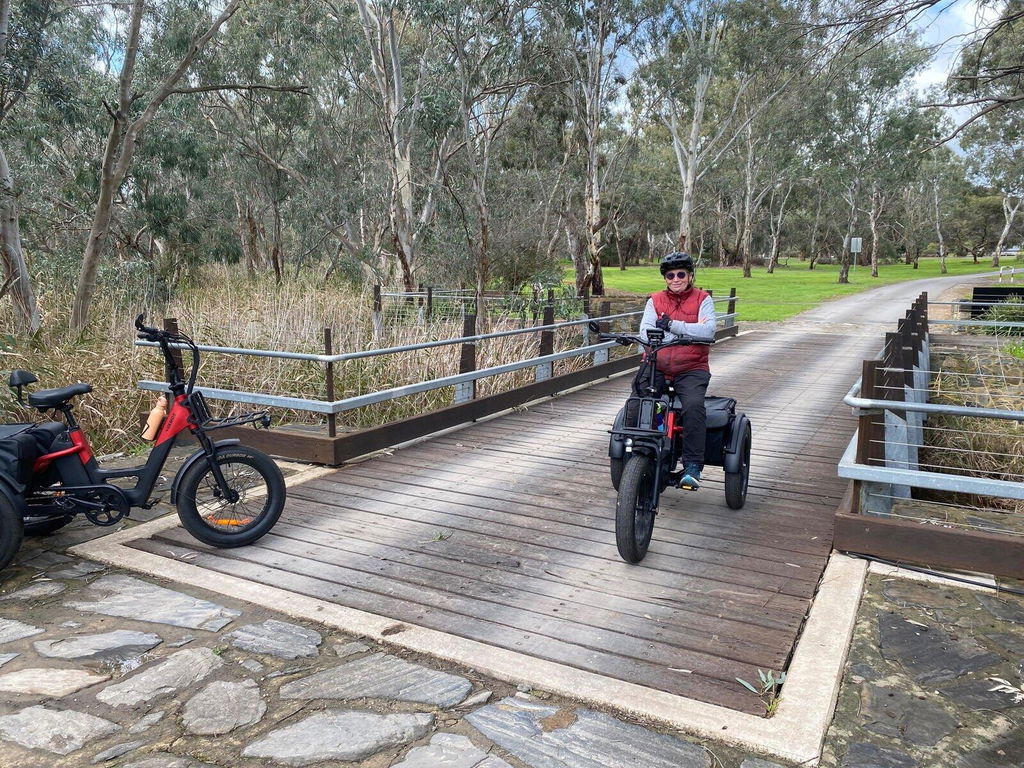
Sand, gravel and grass call for wide tyres. The Papa Grande Pro rolls on three 20 x 4-inch fat tyres, which add grip on beach paths, compacted tracks and unsealed roads. Its 8-speed gears and torque sensor help when the path turns uphill.
Who Might Be Better on Two Wheels
If you ride mainly for speed, have very little storage or need to carry your bike up stairs, a two-wheel cargo e-bike may suit you better. The Vamos El Amigo 2026 All-Purpose Compact Cargo E-Bike offers serious carrying capacity in a slimmer frame.
Vamos 3-Wheel Electric Bikes to Consider
Vamos, an Australian-owned e-bike brand, makes two electric trikes plus a compact two-wheel cargo bike for riders who want hauling power without the width. Both trikes comply with EN15194, arrive locked to 250W and a 25km/h assisted top speed, and carry a 2-year warranty.
Vamos Papa Grande Pro 2026
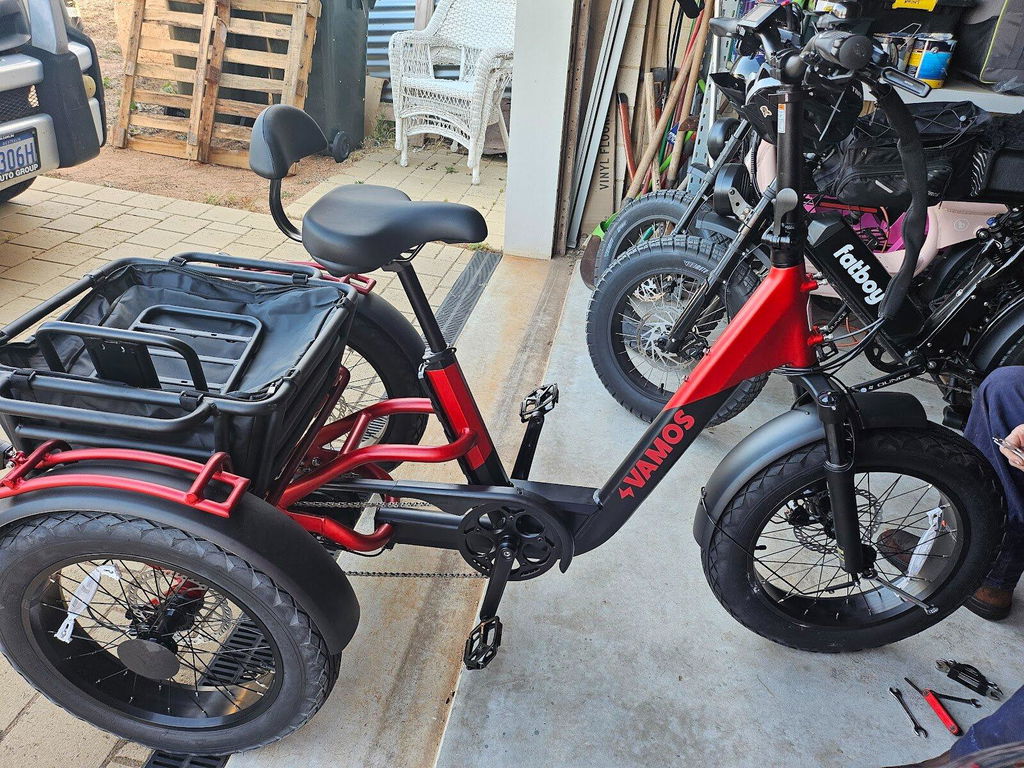
The Papa Grande Pro 2026 is the comfort-first, cargo-ready model in the range. A 500W mid-hub motor (locked to 250W for road use) runs off a removable 52V Samsung battery, with up to 70 km of range on the 20 Ah pack or 100 km+ on the 25 Ah upgrade.
Three 20 x 4-inch fat tyres, a Mozo 90mm hydraulic lockout fork, and a Promax suspension seatpost keep the ride smooth. Front and rear hydraulic disc brakes, a torque sensor and a Shimano 8-speed Acera derailleur handle control and hills. The rear cargo box holds up to 50kg, with a front rack for extra bags.
It also has a big padded seat with a backrest, a thumb throttle limited to 6km/h, indicators and integrated lights. Total weight capacity is 200kg, including rider and cargo.
Best for: seniors, errands, beach paths and riders who want maximum comfort.
Vamos Trio 2026

The Vamos Trio 2026 is the lighter, more affordable trike at about 30kg and $5,495. Its 250/500W mid-hub motor pairs with a removable 48V 15Ah Samsung battery, rated for up to 60 km+.
You get a Mozo 100mm hydraulic lockout fork, hydraulic disc brakes, a mid-axle torque sensor and a Shimano 8-speed derailleur. The 20-inch Kenda tyres suit sealed roads and paths, and the seat includes a backrest. A rear carrier rated to 50kg and a front basket cover your shopping.
Best for: city errands, families and riders who want a lighter model.
Vamos El Amigo 2026 (Two-Wheel Alternative)

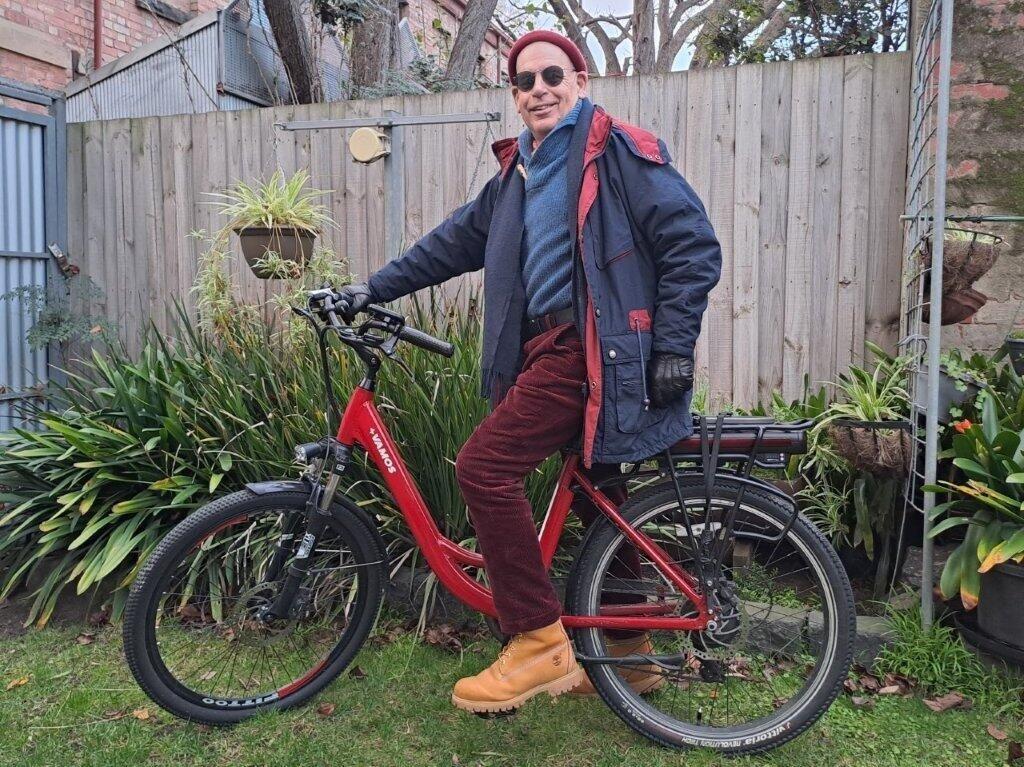
Not sure you need three wheels? The El Amigo 2026 All-Purpose Compact Cargo E-Bike packs cargo-bike ability into a slimmer frame. A high-torque rear motor, mid-axle torque sensor, fat tyres and front suspension keep it stable. Its front and rear cargo trays convert to passenger seating, and a Shimano 8-speed system handles hills.
Best for: riders who want cargo capacity but have tight storage.
Vamos E-Bike Specs Compared
|
Spec |
Papa Grande Pro 2026 |
Vamos Trio 2026 |
|
Price (AUD) |
$6,395 |
$5,495 |
|
Motor |
500W mid-hub, locked to 250W |
250/500W mid-hub, locked to 250W |
|
Battery |
52V 20Ah or 25Ah Samsung, removable |
48V 15Ah Samsung, removable |
|
Range |
Up to 70km+ (20Ah) or 100km+ (25Ah) |
Up to 60km+ |
|
Pedal assist |
Mid-axle torque sensor |
Mid-axle torque sensor |
|
Throttle |
Thumb, 6km/h out of the box |
Thumb, 6km/h out of the box |
|
Brakes |
Front and rear hydraulic disc |
Hydraulic disc |
|
Tyres |
20 x 4-inch fat tyres |
20 x 2.125-inch Kenda |
|
Suspension |
Mozo 90mm fork, suspension seat post |
Mozo 100mm fork |
|
Gears |
Shimano 8-speed Acera |
Shimano 8-speed |
|
Rear cargo |
Up to 50kg, plus front rack |
Up to 50kg, plus front basket |
|
Bike weight |
About 35kg |
About 30kg |
|
Max load (rider + cargo) |
200kg |
200kg |
|
Seat |
Padded, with backrest |
Comfort seat, with backrest |
|
Length |
180cm |
178cm |
|
Assisted top speed |
25km/h |
25km/h |
Is a 3-Wheel Electric Bike Right for You?
A 3-wheel electric bike trades some speed and storage convenience for what many riders value more: stability, comfort and the confidence to ride. If you're a senior, managing balance issues, cutting back on car trips or simply want an easier way to run errands, an e-trike can turn short trips into something you look forward to. That's an awesome kind of freedom.
Compare the Vamos Papa Grande Pro 2026 and Vamos Trio 2026 to find your fit. Both arrive 95% pre-assembled with a 2-year warranty, and the Vamos team offers after-sales service and support once you ride away.
Frequently Asked Questions
For most seniors, they're one of the safest ways to keep cycling. Three wheels eliminate the need to balance, a step-through frame reduces the risk of tripping when mounting, and low-assist levels keep speed manageable. Start slowly, practise turning, and choose a model with hydraulic or mechanical disc brakes.
It's easier in some ways and different in others. You don't need to balance, so starting and stopping is simpler. Cornering takes adjustment, because you steer through turns rather than lean. Most riders feel comfortable after a few short practice rides in a quiet place.
Many electric trikes are rated for roughly 40- 100 km per charge, depending on battery size. Real-world range drops at higher assist levels, with heavy cargo, strong headwinds, and steep terrain. Riding in a lower-assist mode and keeping tyres properly inflated will extend your range.
Yes. The motor's torque and pedal assist handle most of the work on climbs, and multiple gears let you choose an easier gear ratio. Steep hills with a full load drain the battery faster, so raise the assist level and keep a steady cadence.
Generally no, provided the trike meets the EN15194 e-bike standard, with motor assistance cutting out at 25km/h. Compliant e-bikes can be ridden without registration or a licence, but road rules still apply. States and territories set their own requirements, so check with your local transport authority.